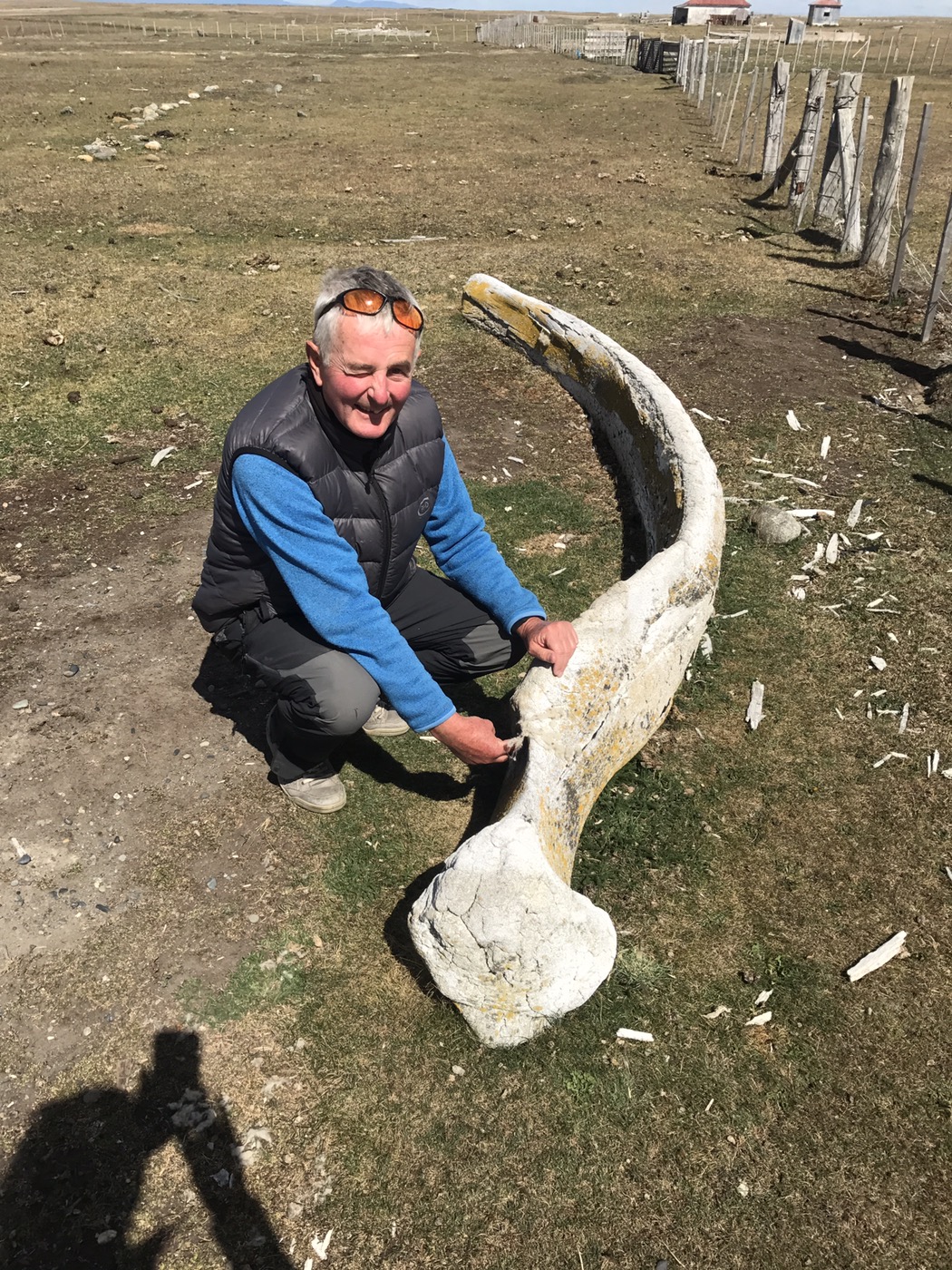
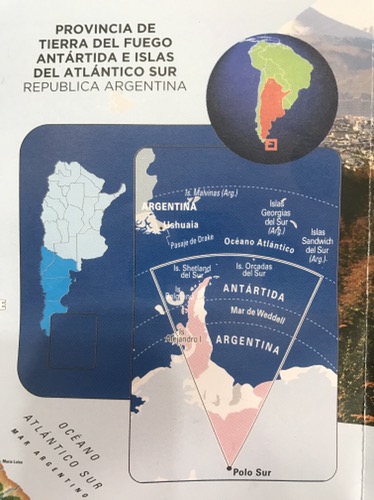
Crossing into Tierra Del Fuego . Sad gravestones of English cemetery…whale rib. Interesting map !! Ushiaia, seals penguins and wild camping and fire at Estancia Harberton…. lovely story … vide infra as always
2 thoughts on “Crossing into Tierra Del Fuego . Sad gravestones of English cemetery…whale rib. Interesting map !! Ushiaia, seals penguins and wild camping and fire at Estancia Harberton…. lovely story … vide infra as always ”
1st Feb – Tierra del Fuego
Day 46
We made an early start towards our 4th crossing from Chile into the Argentina. It was a long dusty drive alongside the construction of a big new road, probably for the use of the great big oil tankers. There were signs warning us not to leave the road due to mines!! Chile had planted them in the 90s to stop the Argentinians invading their border during a dispute over the ownership of 3 islands in the Beagle channel. Chile views Argentina as its big bad neighbour. It’s just as well we wild camped where we did free from mines!!
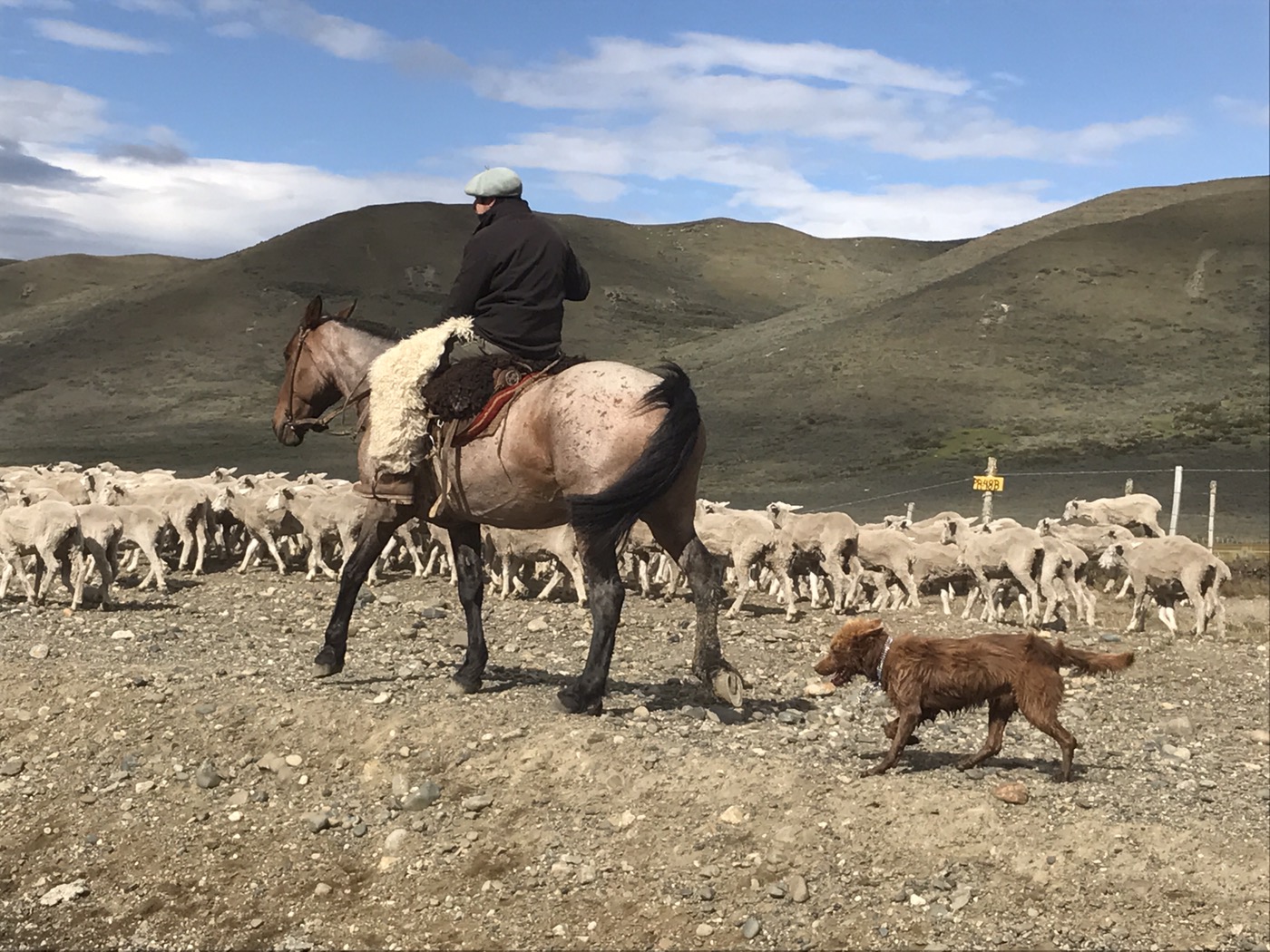
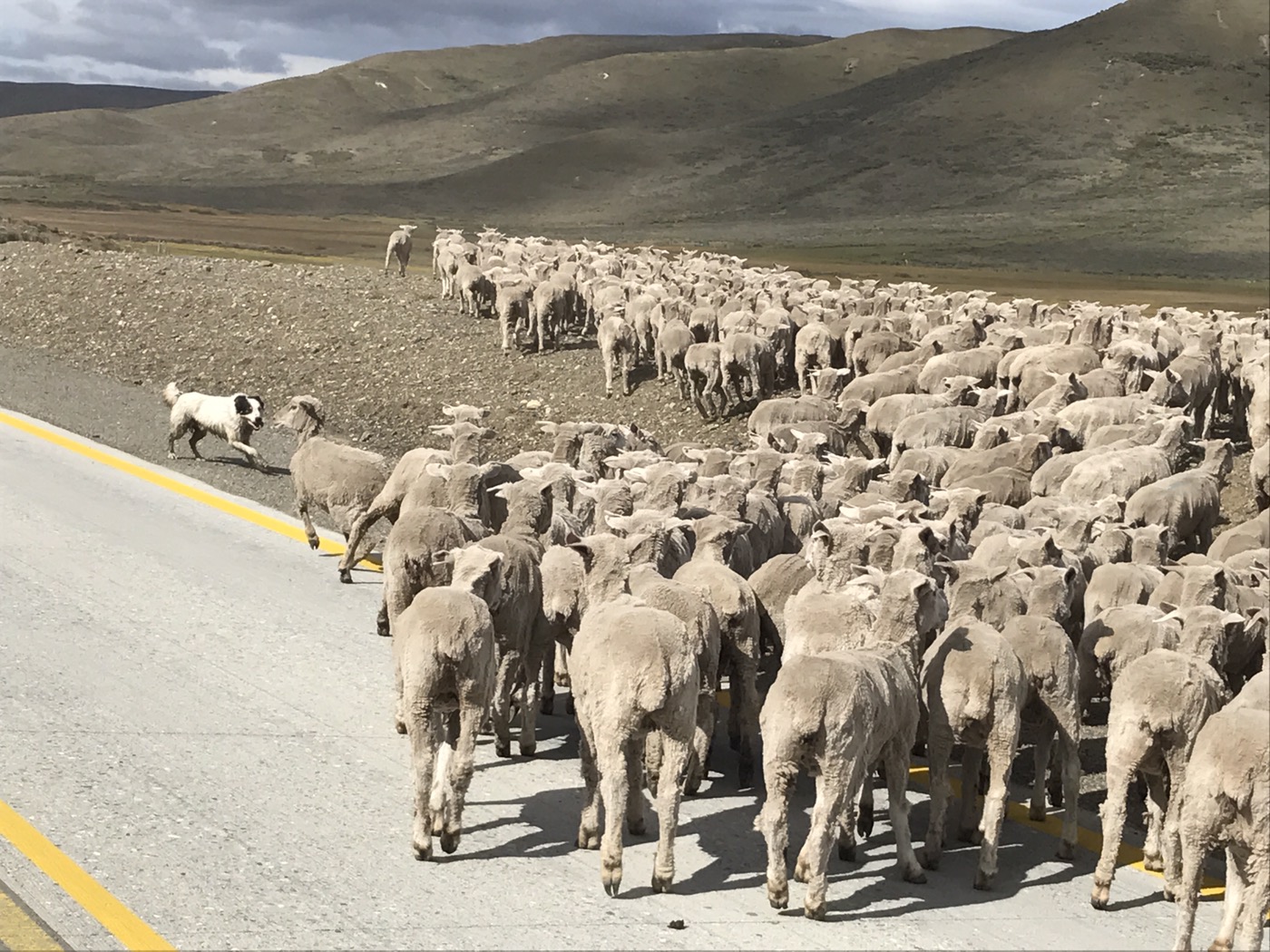
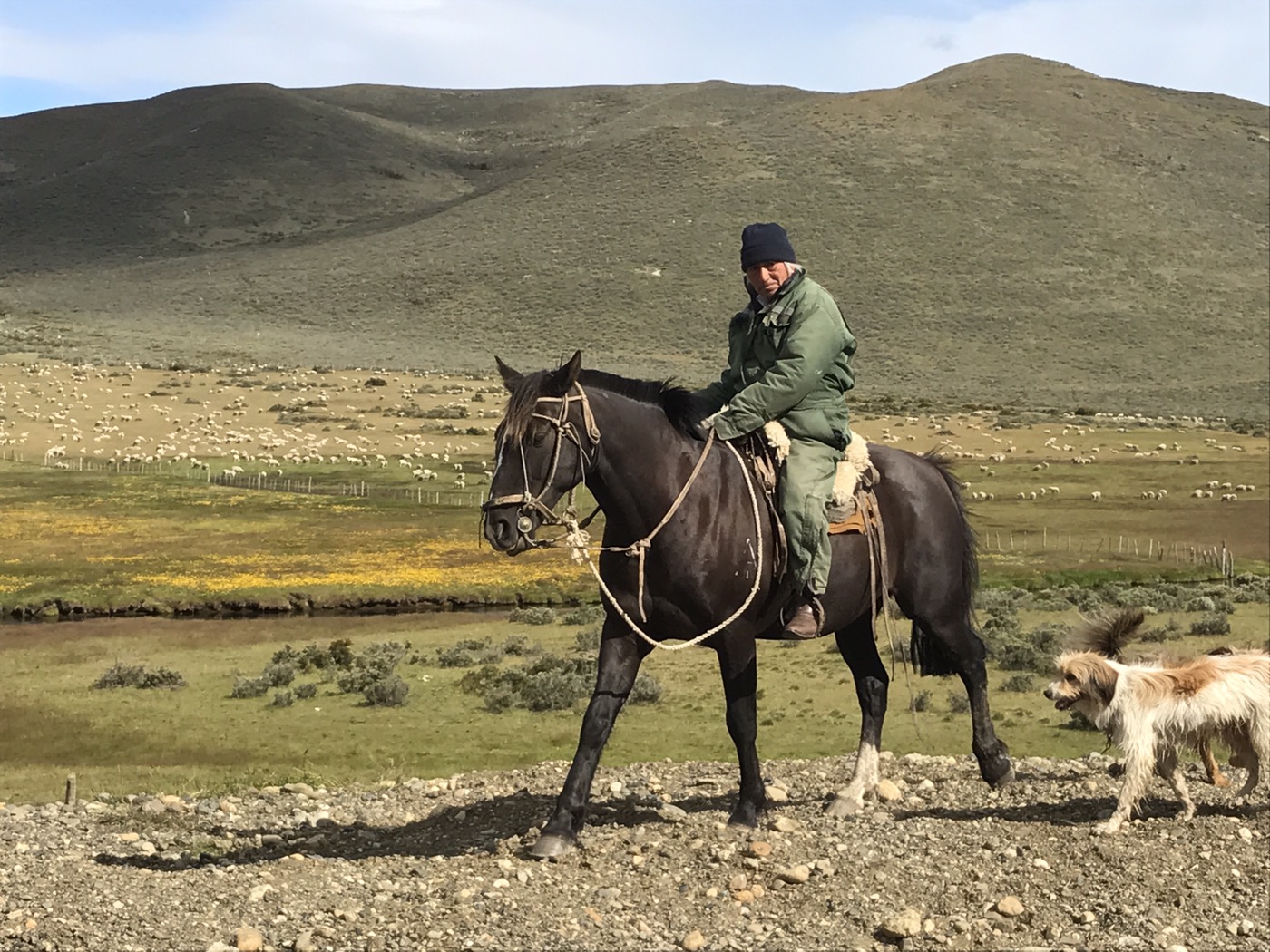
Just before the border, we stopped to hide our fruit and veg and have a coffee. Right behind us we’re thousands(?) of sheep being herded together . We watched with fascination as the local ranchers sat astride their horses doing very little, while their hugely talented and enthusiastic sheep dogs sped around these thousands of sheep, leading them to new ‘pastures’. The dogs were having a wonderful time, coordinating with each other to ambush a stray sheep and force it to rejoin its flock. We were a most impressed audience.
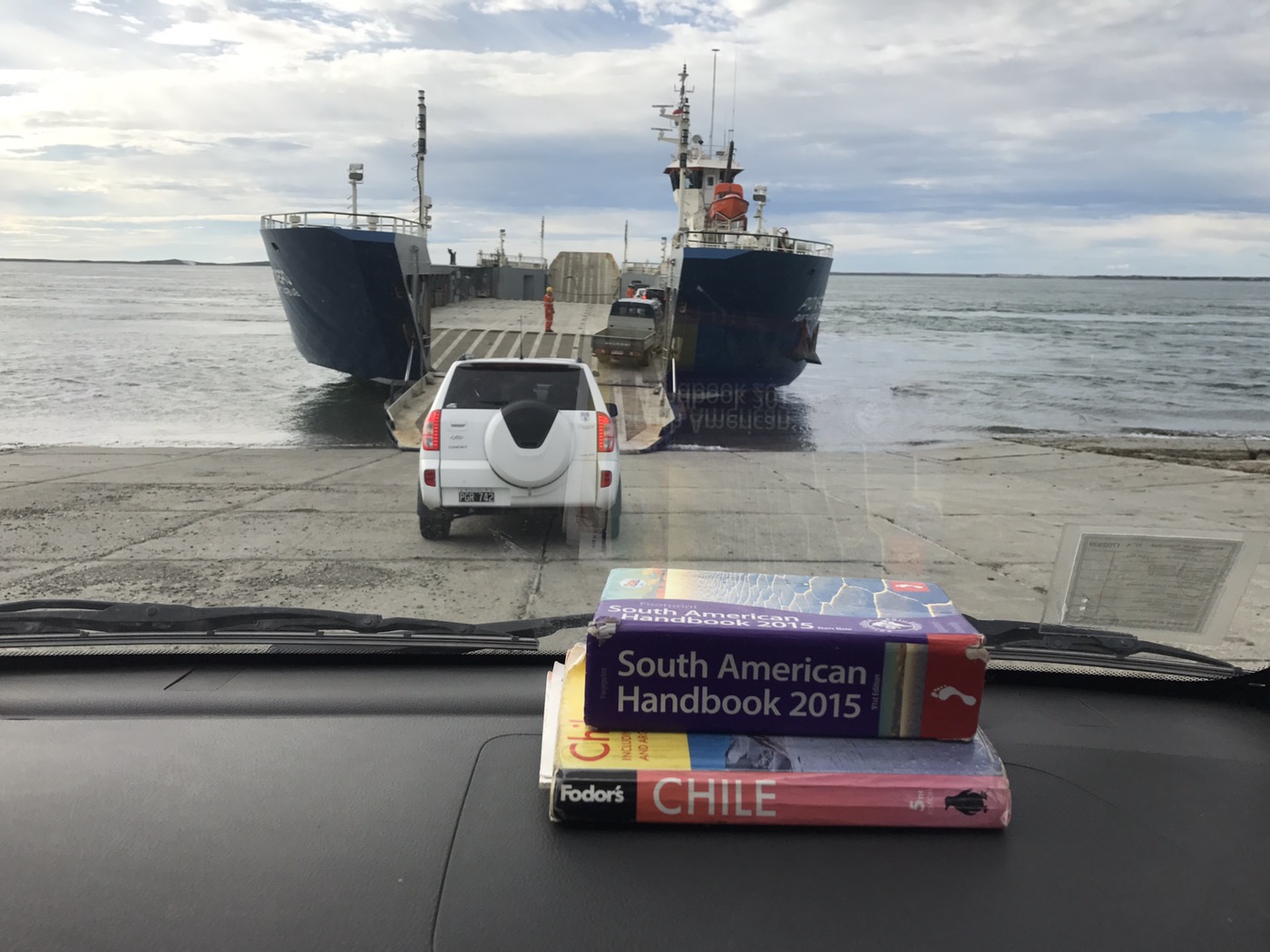
Obviously we are now experts at these borders, knowing the procedure and finding the right queue. Slightly worryingly, our passport pages are filling up at quite a rate and mine is almost full. We were through in no time and arrived just in time for the 9am crossing to Tierra del Fuego. It was great fun with huge industrial equipment being transported on top of massive lorries on the open ferry, being taken to the oil refineries or construction companies. In the water at the front of the ferry, Neil saw a big white object gliding through the waters below, which may have been a shark or a whale. Other Argentinians were equally excited.
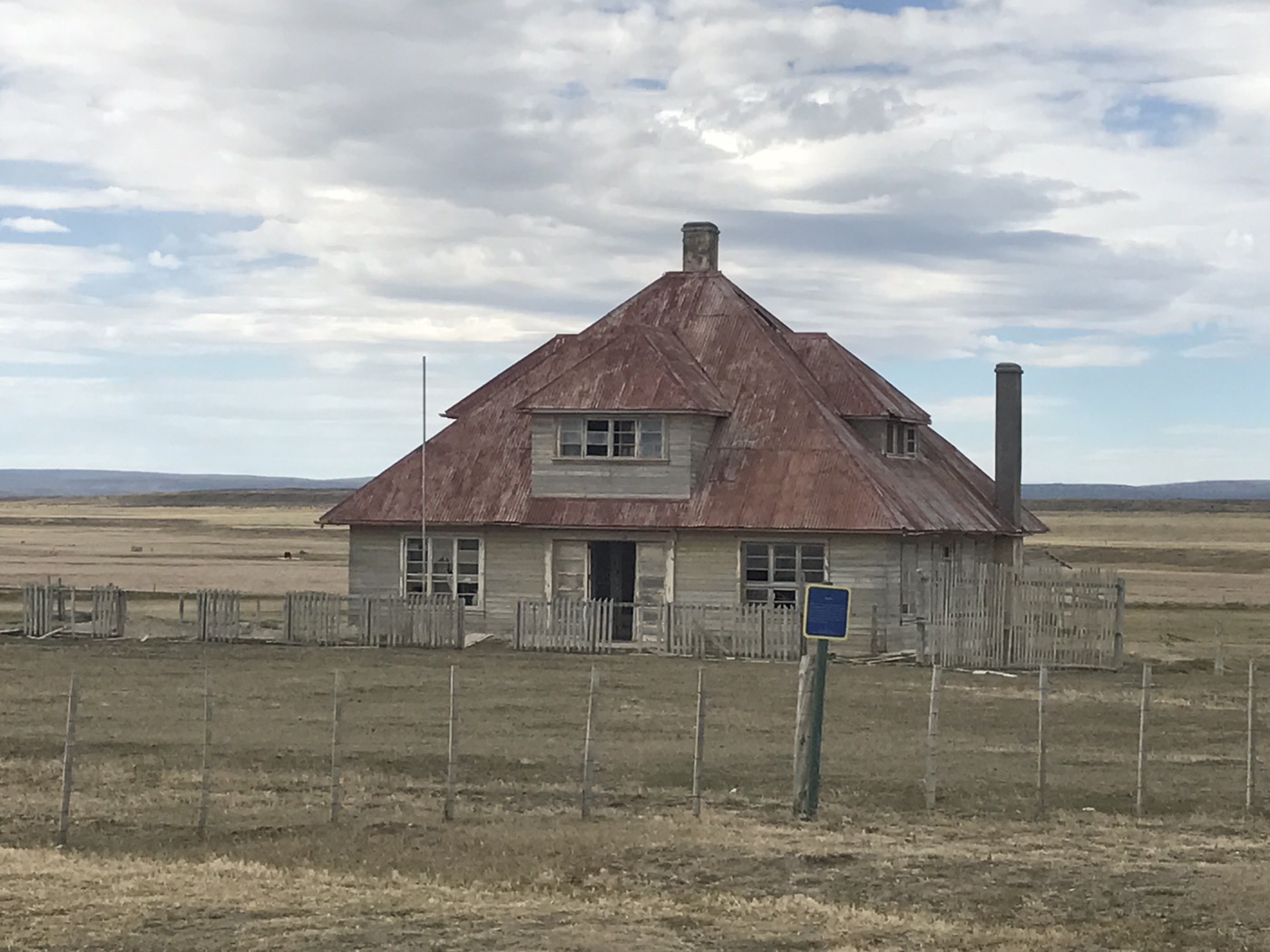
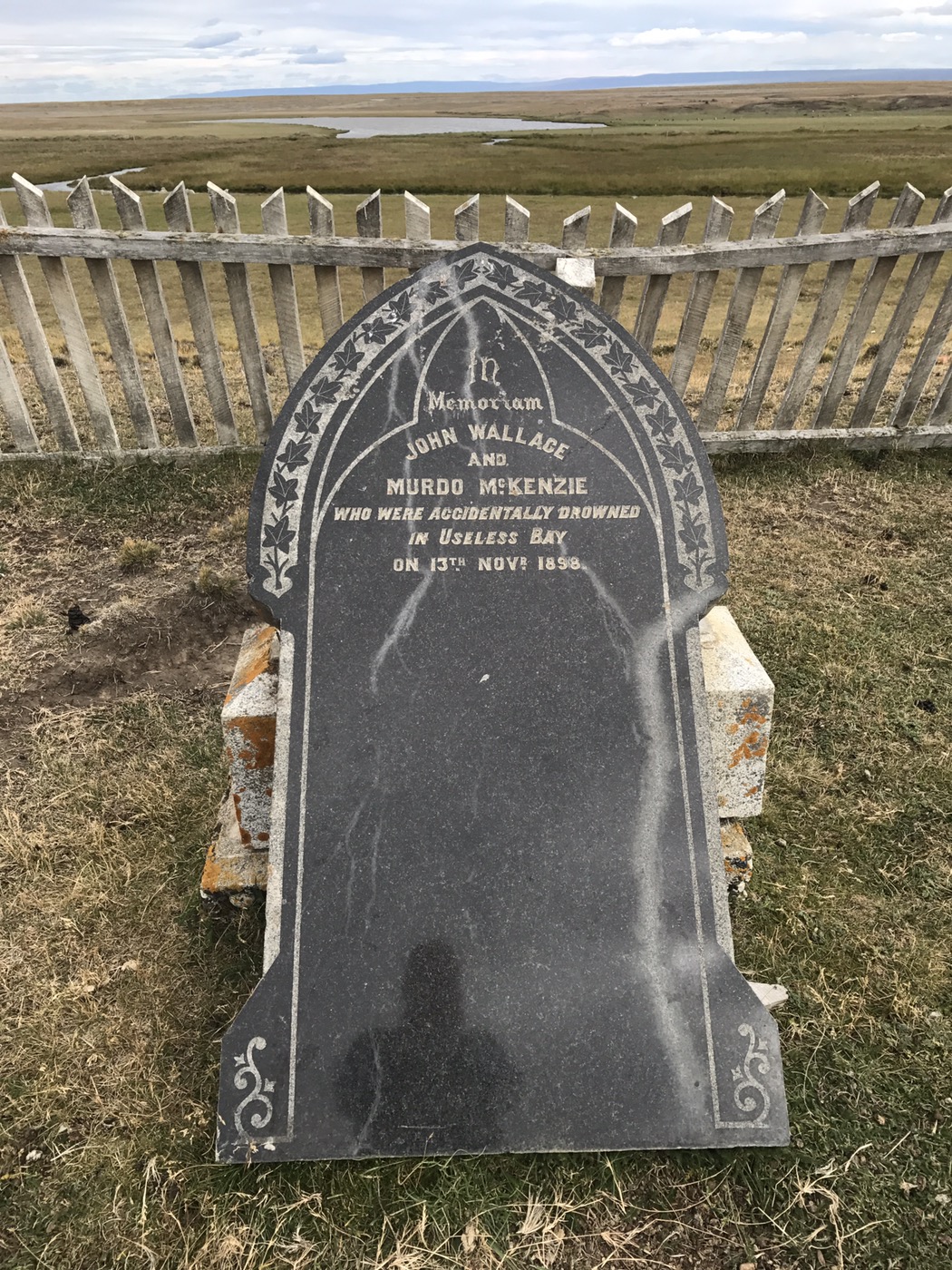
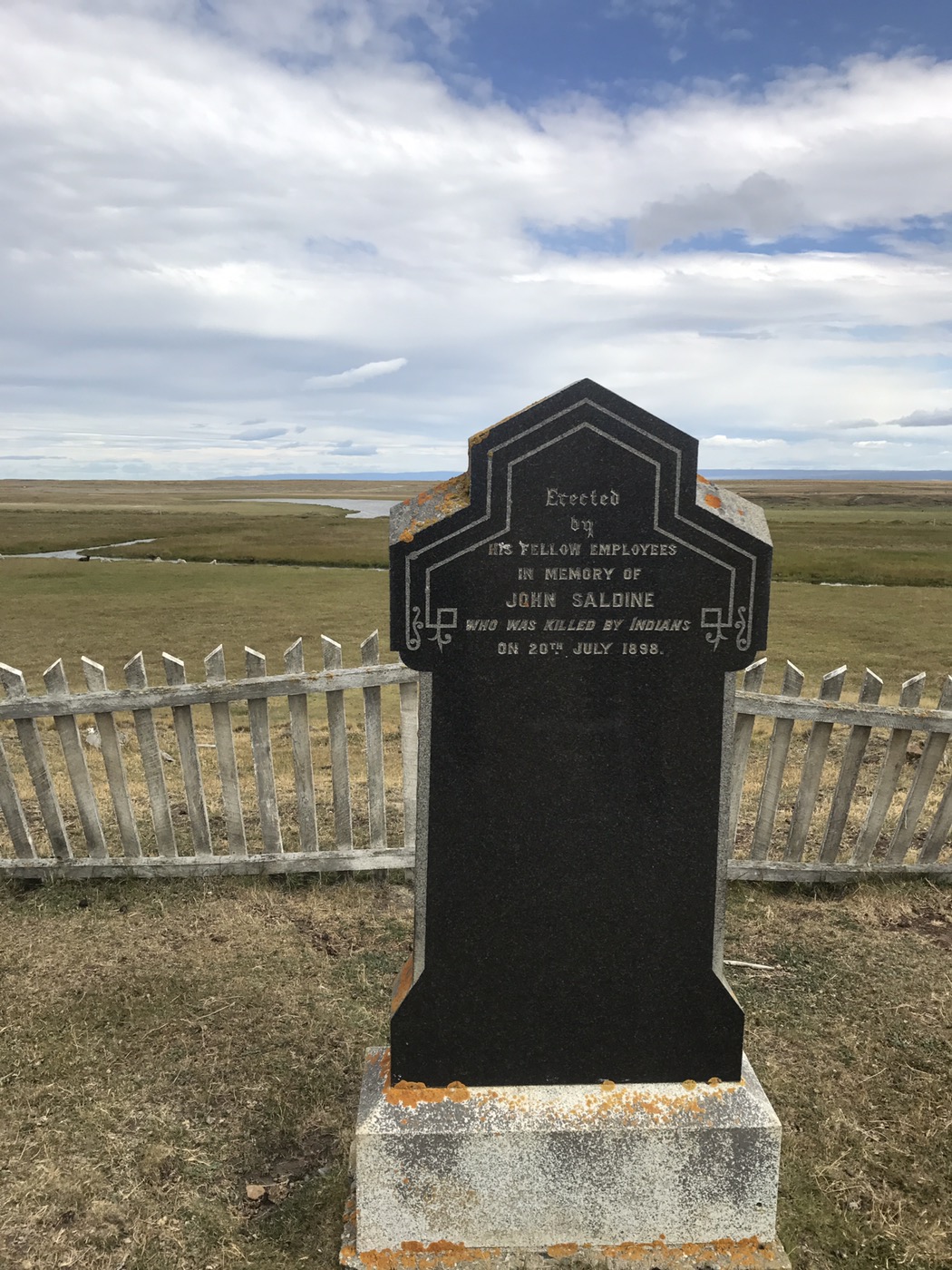
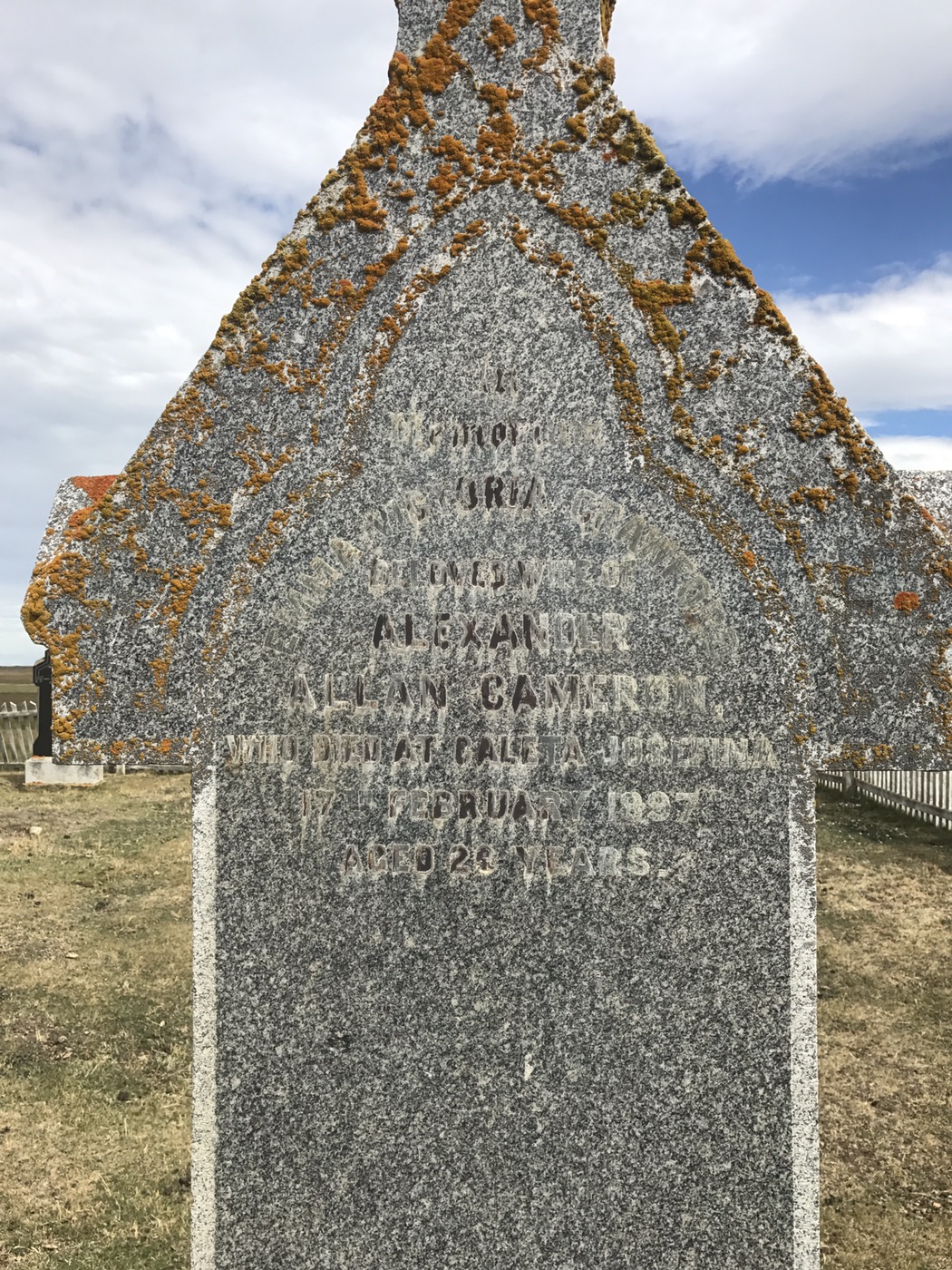
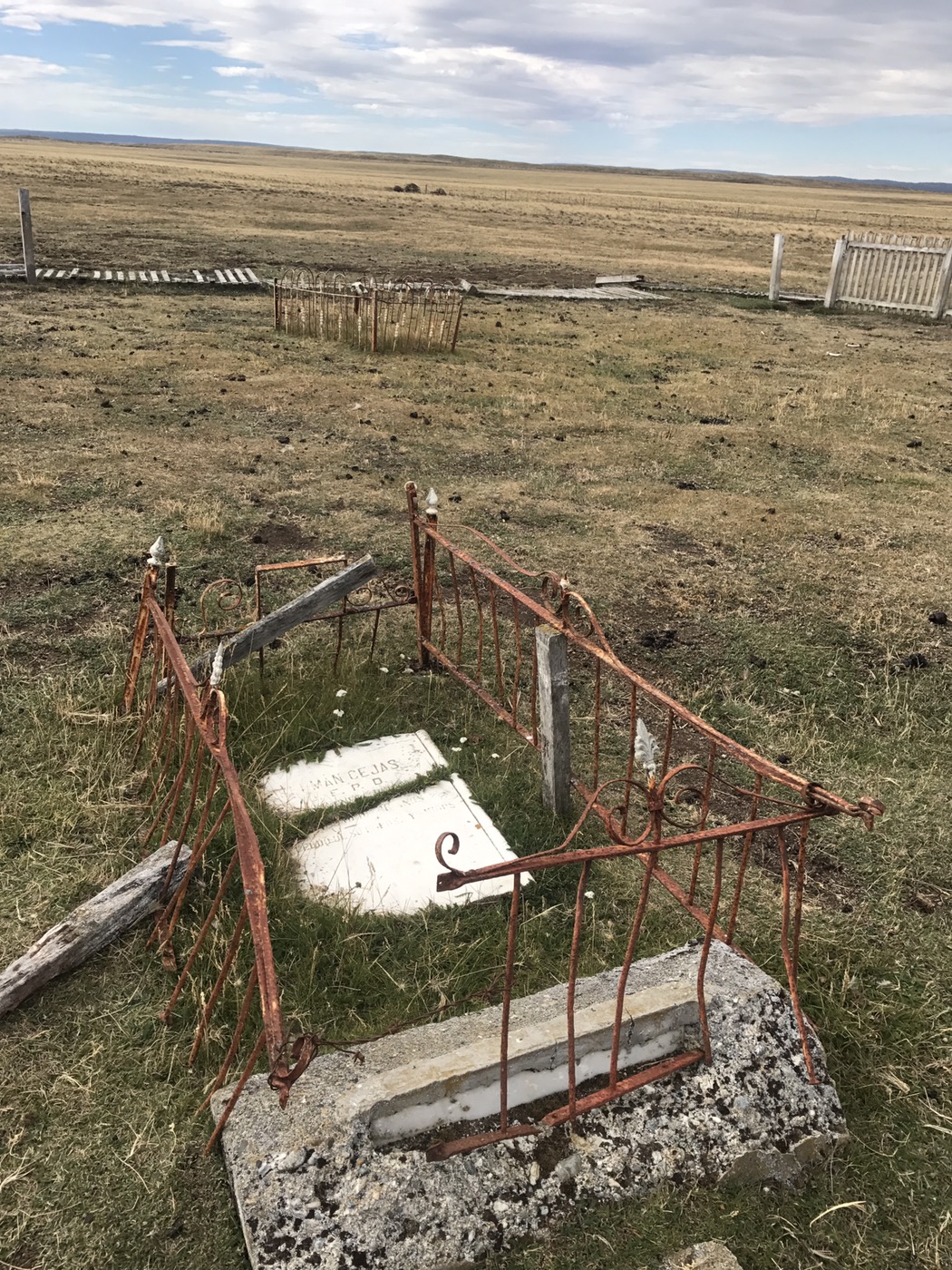
Once in Tierra del Fuego we decided to take a slight detour to see an old English graveyard indicated on our map. It had 4 or 5 impressive granite gravestone which told their own stories. All had died in the late 1800s, 2 men were killed by Indians, 2 by drowning in Useless Bay and a 26 year old lady died, maybe in childbirth? Such was the life of the early settlers in these areas. In the distance we saw a large abandoned estancia and surrounding smaller houses, also abandoned.
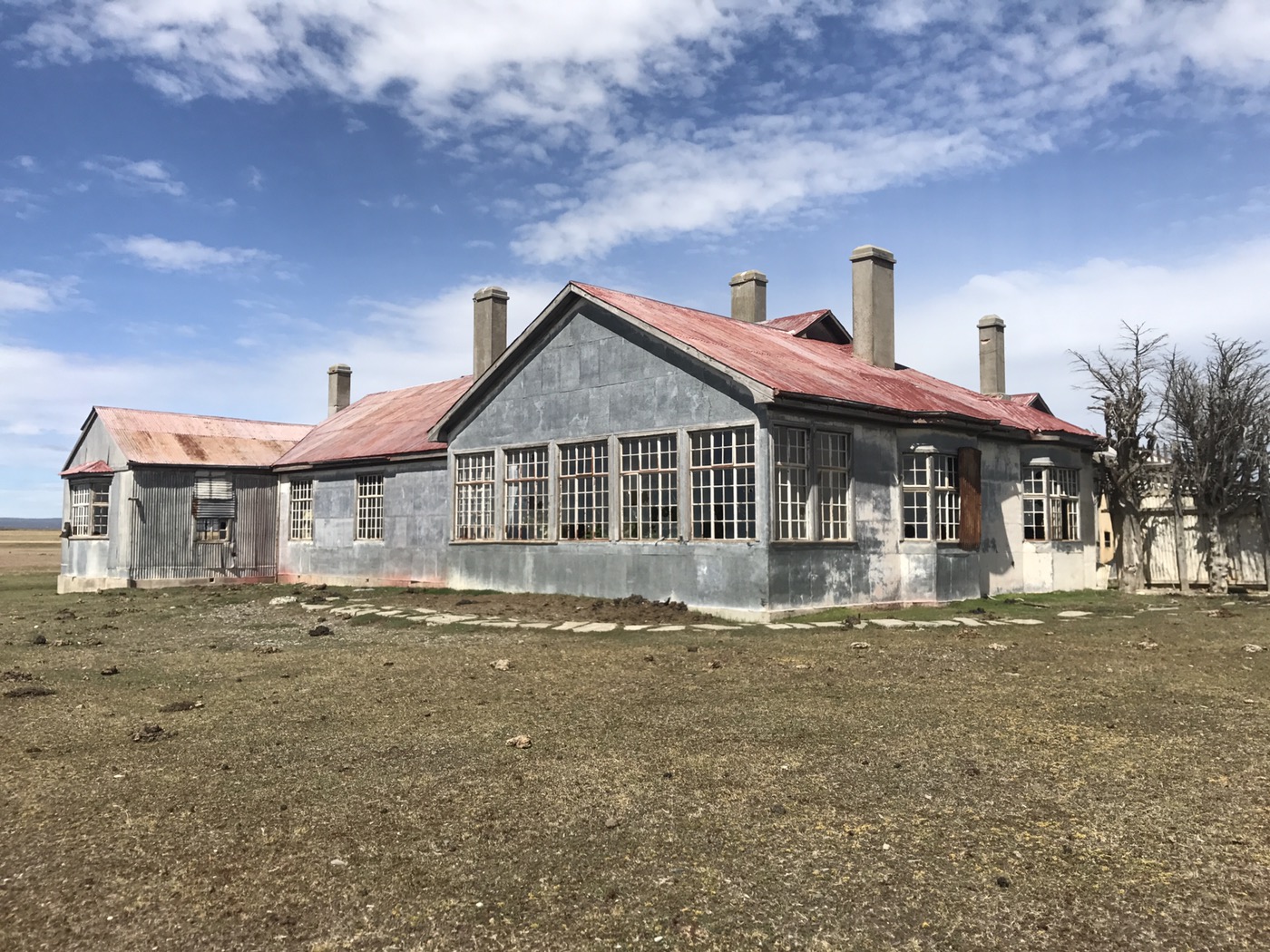
We drove on to explore the farm with its battered lopsided sign “Estancia Josephina”. We were soon ticked off by a guardian who appeared from nowhere, but became friendly when we explained we were English. These old estancias have been designated as national monuments and are looked after by local farmers, and he invited us to have a good look around.
In its day, it must have been an impressive two storey home with massive decorative rooms and huge fireplaces in each one. All the windows had 2 sets of windows, essentially double glazing, to keep out the wind and the cold. Now the glass lay shattered on the floor and the paint pealed away from the walls of the empty rooms. We could imagine the life once enjoyed there of dinner parties, children running through the rooms, arguments over land boundaries, guns left by the front door, discussions about sheep and cattle. The farm warehouse across the way was enormous and millions of sheep must have been processed through it. It didn’t take much imagination to see ourselves back in those pioneering days. We felt rather sad for those families who’d lived and lost all this.
We drove further along the flat dry plains and past more oil wells to reach the booming port of Rio Grande. Compared with the pretty Puerto Natales, we found it simply functional and rather boring. It had lots of new shops and banks and was surrounded by big factories, so we withdrew some cash from the bank and drove on.
Searching, as usual, for a place to camp, preferably near water, we drove on south to Tolhuin. We had no idea this flat dry windswept countryside of the north of Tierra del Fuego would develop mountains and lakes towards the south. It was simply beautiful. What a wonderful surprise! Tolhuin is such a pretty town full of little wooden houses, wide streets and chilled relaxed people. We loved it.
We’d read about a famous bakery in Tolhuin which supposedly had the best pastries in the Southern Hemisphere and it did! It’s charismatic owner had started it in the 1980s and had managed to attract famous Argentinians from all over the country to visit, displaying their photos proudly on the walls. Our friend Jude from Culmstock told us he loved cyclists and she was given free accommodation in his basement during her epic cycle ride through S. America.
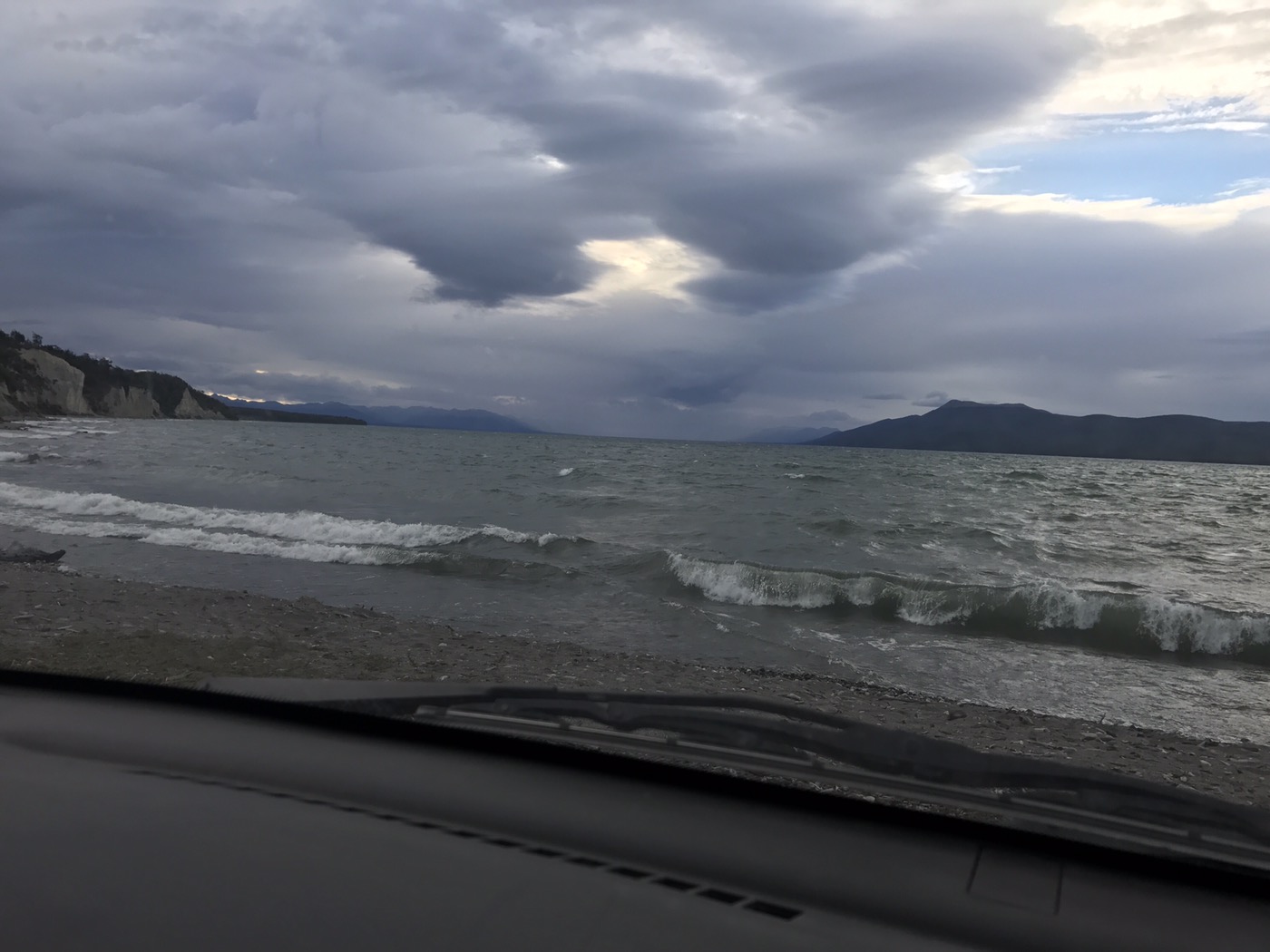
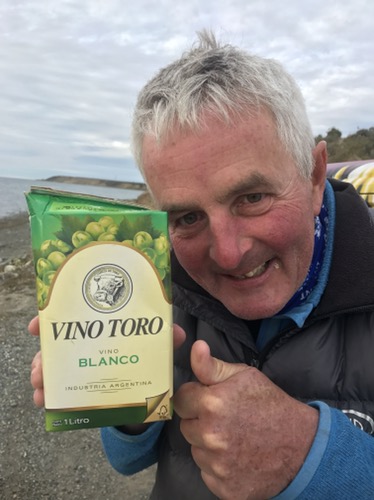
Afterwards, we headed to wild camp at the edge of the nearby lake Fagnano. The wind had whipped it up to look more like a grey sea as we sat in the bar (I.e. our 2 front seats) sipping a G&T, before retiring to the dining room (back of camper) to enjoy another home cooked meal then sleep.
2nd Feb – Ushuaia
Day 47
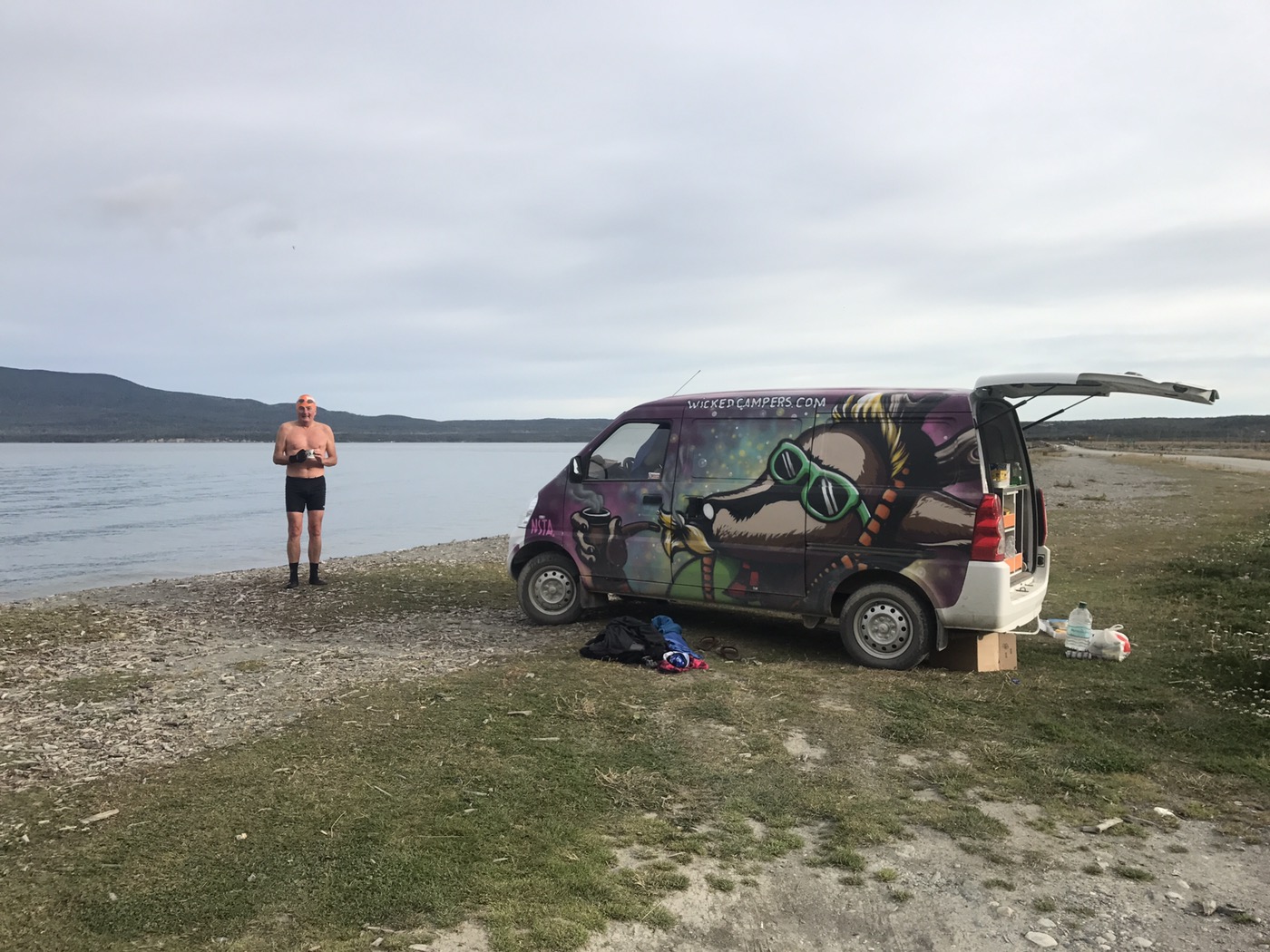
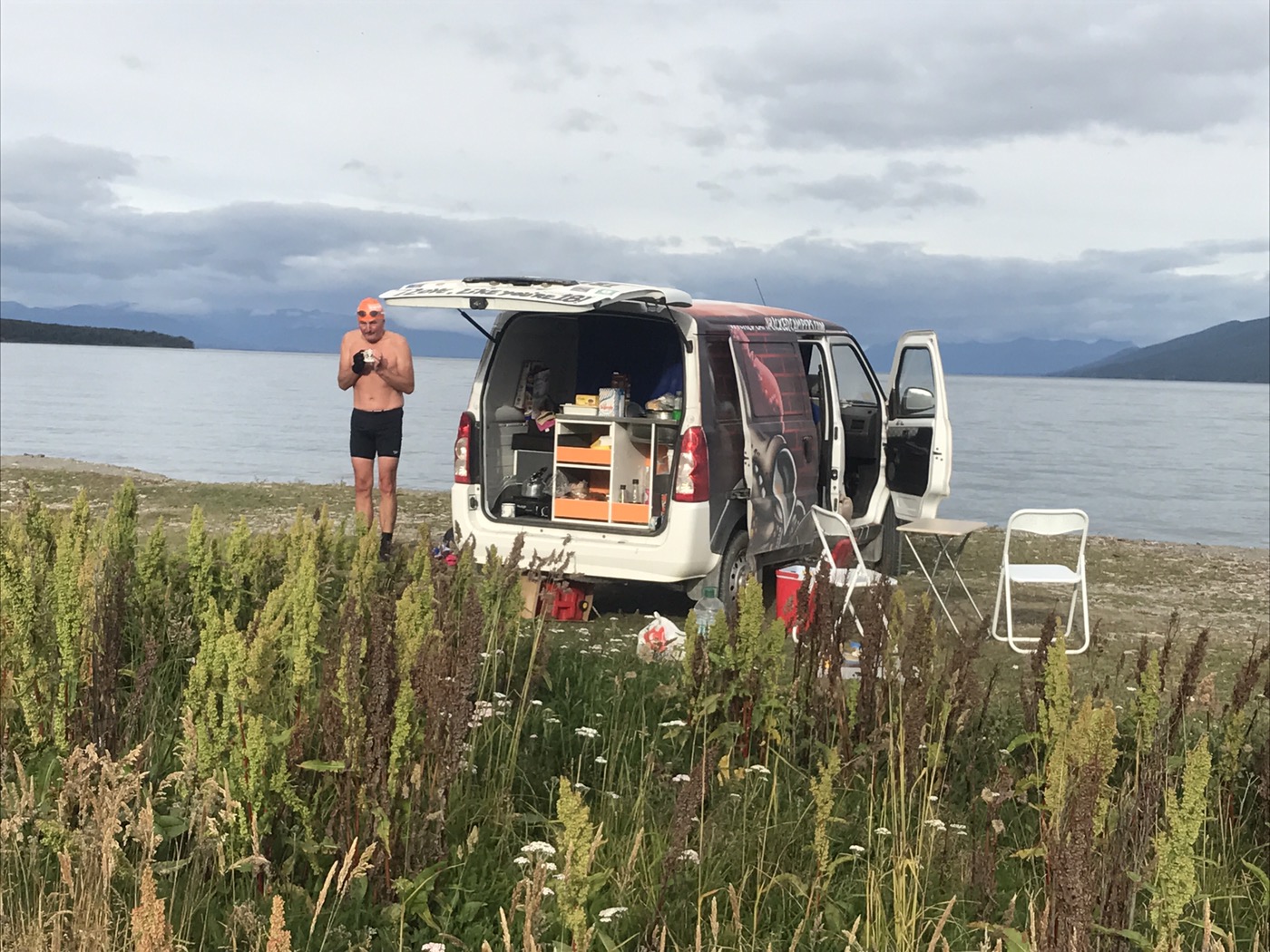
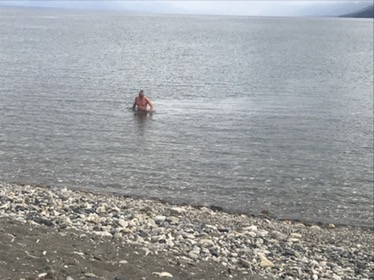
Most mornings we’d find the wind has subsided and today was no different. I awoke to see Neil in his swimmers, determined to have a swim in Tierra del Fuego. I was so impressed as he barely hesitated as he entered the cold lake. He claims to have enjoyed this rather invigorating start to the day, but grately appreciated the hot cup of tea handed to him as he emerged from the freezing water.
Leaving the lake, we wound our way up through beautiful forests and snow capped mountains, passing a ski resort and looking down deep valleys with white lakes reflecting the early morning sun. It was a stunning drive.
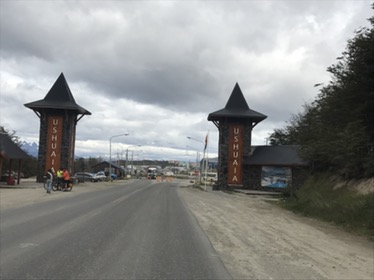
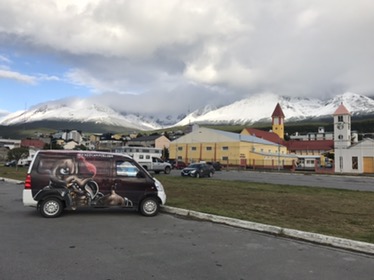
Ushuaia is an attractive town right on the Beagle channel. As you can imagine, it has a thriving tourist trade serving the thousands of people who pour off the Antarctic cruise ships. Like Bariloche, it looked a bit Swiss with attractive, colourful wooden buildings and a pretty high street full of outdoor equipment shops and coffee bars.
We parked in a big car park at the sea front overlooking the port, then visited the museums. We saw some fascinating genuine film footage of the Yamana Indians living in Tierra del Fuego, taken in 1930. They wore just animal skins to protect themselves from the freezing winters and no shoes. This particular tribe lived mainly on fish, so the whole family would spend the days in wooden canoes, even with a fire at the centre of it for cooking. The man at the front would spear the fish while the woman paddled at the rear and the children sat in the middle. Their huts were tiny round structures made from thin branches, bent into the shape of an igloo, with guanaco skins over them for warmth. There was also some great footage from the same era taken by a German pilot from a biplane. This place has attracted adventurous explorers from all over the globe. His films are so valued as we can see how the glaciers have retreated since those early days.
The museum explained how Ushuaia had originally been a penal colony with a rugged coast line of jagged rocks above and below the surface of the water. It told the story of a negligent sea captain on one of the first tourist cruise liners to come to the area in 1890. He steered his ship through what he thought was a shortcut in the Beagle channel, ignoring the lighthouse. The ship hit the rocks and sank. Fortunately all 1200 people on board made it safely to shore. The inhabitants of the town were mostly prisoners and their guards, but they all helped rescue the stricken passengers, lending their coats and uniforms to keep them warm and sharing food. The whole population of Ushuaia was then just 800, so catering for 1200 unexpected guests was quite a challenge. Before the ship completely sunk, the captain returned, allegedly to collect some papers. He disappeared with the ship as sunk to the depths of the sea.
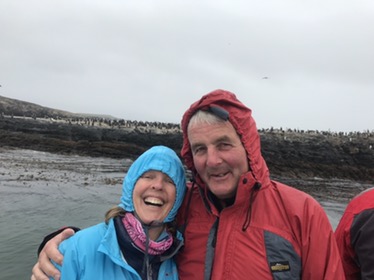
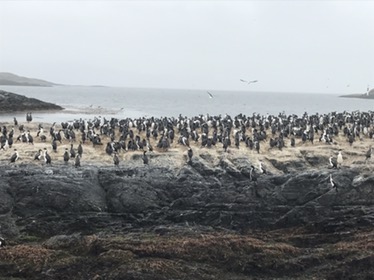
Suitably educated, we bought tickets for a boat trip to see the sea lions and cormorants on the islands in the channel. It was still raining and windy, so the boat was only half full and wonderfully warm. We quickly made friends with the other passengers on board as we bounced our way over the waves to the islands. The first was absolutely packed with busy noisy cormorants nesting and fishing. Our boat was able to steer extremely close to the rocks where we could see their nests and marvel at the way they would fly at huge speed skimming above the water.
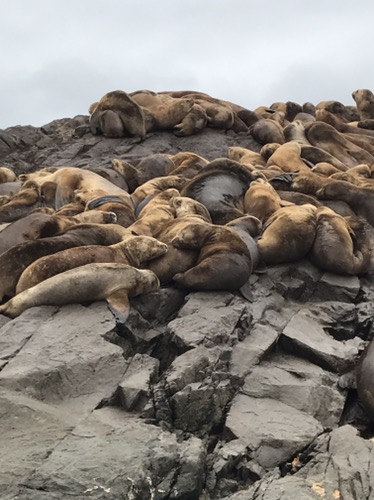
Then we sailed to another large rock full of sea lions. It was full of mothers and cubs with just one enormous slug like male sea lion asleep in the middle. They were all lying almost on top of each other for warmth and were hilarious to watch. Some would cuddle up to others who didn’t want to be cuddled. The snuggly cub would land a flipper on the disgruntled sea lion as he nestled in and persisted in his cuddling. The irritated sea lion would bark at the annoying cub and still it kept cuddling until the other would finally move away. The cuddling sea lion would then find another unsuspecting resting sea lion to annoy and start all over again. We could have watched this go on for hours.
A friendly Italian we met on board the boat recommended a great seafood restaurant in town called Tia Elvira. We were both quite cold and wet and it sounded perfect so we headed straight there. We had the most delicious sea food meal and enjoyed a wonderful bottle of Malbec. Suitably warmed up, we returned to the campervan, dumped our wet things in the front seats and climbed into bed. It was only 10pm but bed was the best place to be in such an evening.
But! Oh dear! No loo! It’s so easy for Neil. He just faces a wall looking interested in something and he’s fine. Not me! There were floodlights everywhere AND it was still raining. I crept all over the car park looking for a private place, but no luck. Then I saw some dark buildings. At last! But it was a restaurant and the customers inside were looking at me. What was this strange woman doing, wandering outside at 1am in the pouring rain in her coat and pyjamas?
On I lurked until I found a dark secluded place between 2 huge dumper bins. Relief!!!
A lesson learnt! Huge open floodlit car parks aren’t exactly conducive to a good night’s sleep!
3rd Feb – Harberton
Day 48
On waking, Neil looked out of the campervan window to see that all that rain we’d had last night had turned to snow, just a few metres higher than us on the mountains behind Ushuaia. It had been a cold night after my midnight escapade.
Since my comfy shoes were soaking wet, I wore my walking boots to the tourist information to wash and brush up in their loos. Luck!! It had the hottest hand drier ever! So I ran back and retrieved my soggy shoes and socks and spent the next 20 minutes in the tourist information loo drying them. I was able to put my comfy shoes back on straight away.
Neil also made good use of their loos having a shave and stripping down to the waist to wash while tourists came and went. What a pair! But a rather happy warm clean and dry pair!!
We’d pretty much seen most of Ushuaia and didn’t relish the idea of another night in the car park, so drove off to to a pretty place called Harberton. Yes! As in the Harberton in Devon.
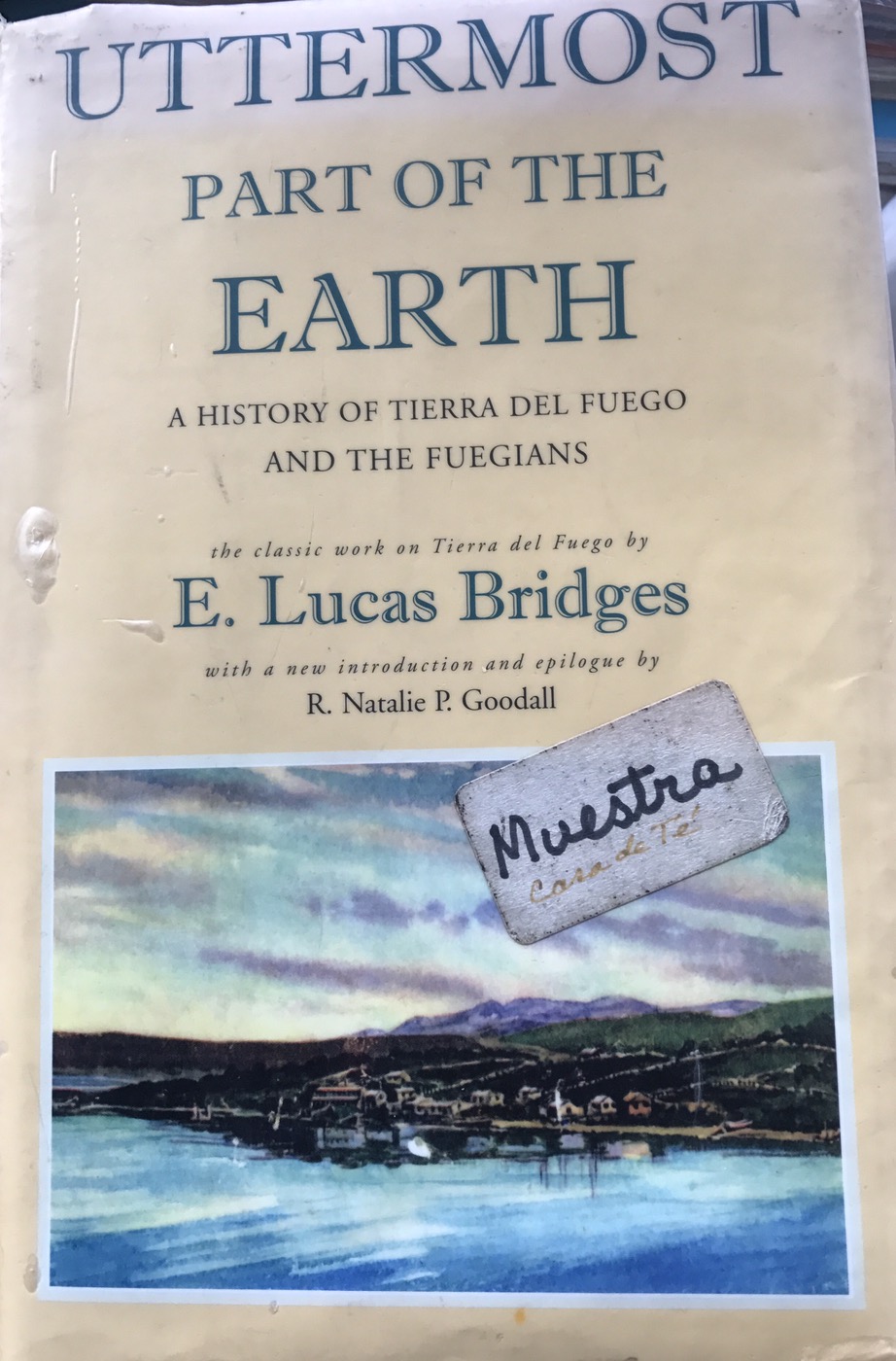
It’s a huge estancia founded in the 1880s by an Englishman, Thomas Bridges. As a baby, he was abandoned under a bridge in London and was labelled T Bridge. The reverend who adopted him named him Thomas Bridges.
When Tom was a teenager, his family moved to become missionaries in Patagonia. But after a few years and a particularly vicious attack from the indigenous Indians, Tom’s family returned to UK. But Tom remained aged only 17 and continued to work hard for the missionary in Ushuaia, befriending the local Indian tribes and contributing hugely to the new settlement.
In his late twenties he went back to UK to study and fell in love with a Devon lady from Harberton. Soon they were married and undertook the gruelling 6 week boat trip back to Ushuaia.
She vowed never to return to Devon as the sea journey had been so awful, and settled with Tom in the missionary. Together they had 6 children.
In his spare time, Tom spent years and years compiling a dictionary translation of the strange Yamana language into English.
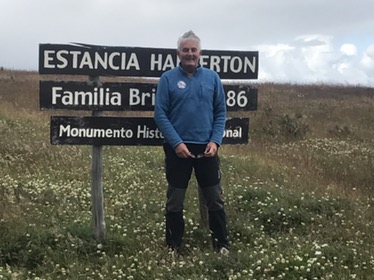
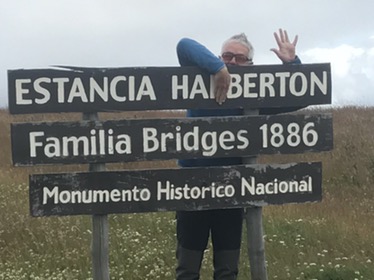
In thanks for all his hard work, the Argentinian government awarded him 80,000 hectares near Ushuaia in the very south of Tierra del Fuego. He built a huge farm and named it Estancia Harberton after his wife’s home town in Devon. They shipped much of their farming equipment from England and bought animals from the best stocks around the world. They were strong, hardworking and successful. Some of their direct descendants still live at the Halberton estancia which makes most of its money these days from tourism.
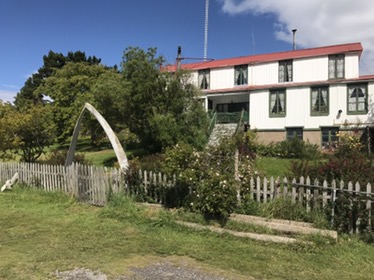
It’s a beautiful place to be. A huge farm right on the shores of the Beagle canal and looks the same today as the farm in photos taken 100 ears ago with its huge whitewashed walls and red tin roof. The barns and outhouses were all painted the same way. The big barn still contains the old farming equipment used for shearing etc. There was even an old turquoise Triumph Herald parked in the corner. We could easily imagine the life they’d have led over 100 years ago.
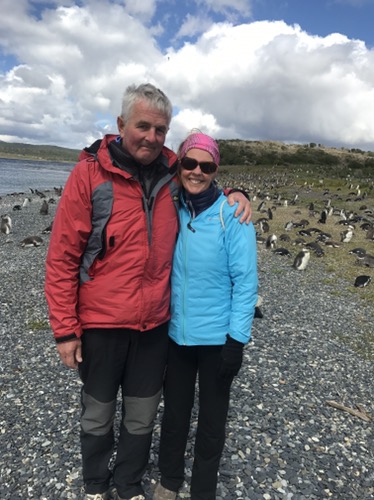
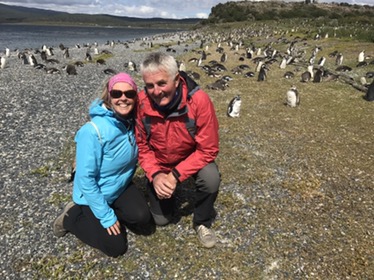
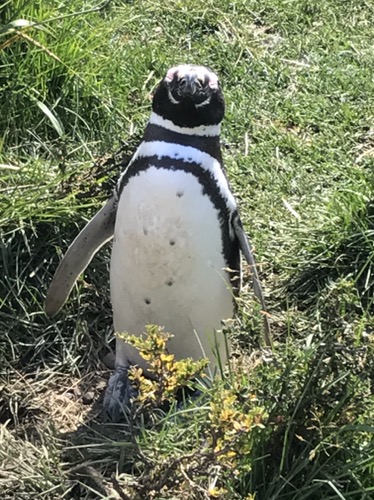
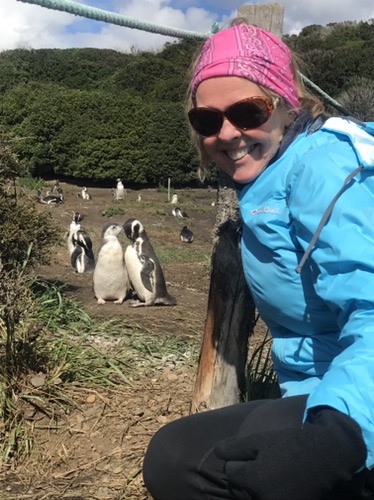
From there, we paid rather a lot of money (cash of course) to join a boat to sail out to the penguins on a nearby island. It was wonderful. We were able to walk right through their colony, inches away from some nests. The penguins didn’t seem to mind our presence at all. If they are nesting, its possible to annoy them, so the penguin starts to sway her head from side to side as a message to back off,which we did immediately. But generally they totally ignored us as they closed their eyes and soaked up the summer sun.
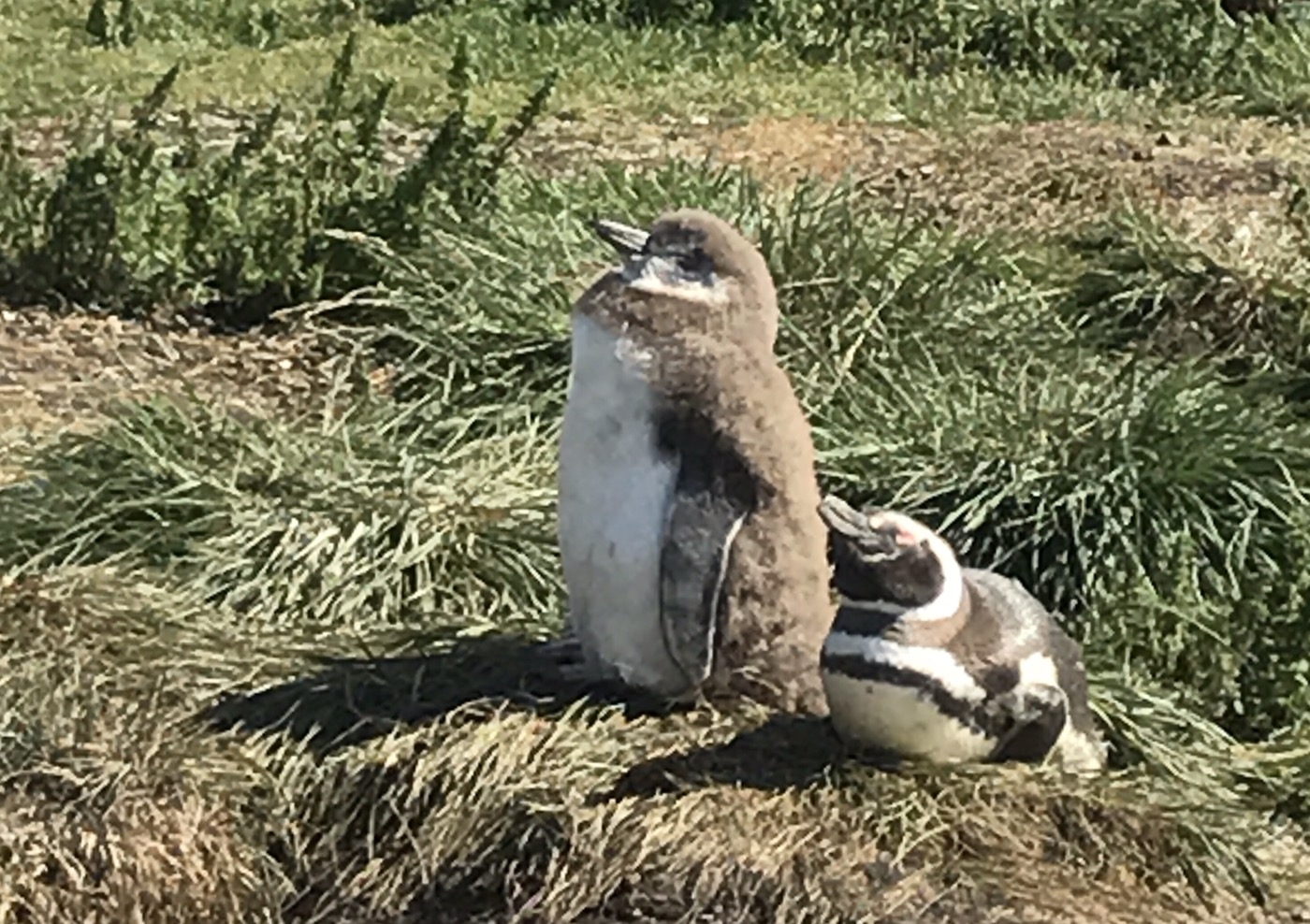
There were hundreds of tall black and white King and Magellan penguins to watch. We saw many many nests with mothers tending their big fluffy baby penguins who snuggled up to them. We watched how smoothly and fast they swam through the water fishing. A hilarious site was to see a teenage penguin try to run away from his nest in a very determined waddling fashion. His mother would waddle after him, through the colony and across the beach, as he’d swerve this way and that dodging other penguins to avoid capture by his mum hot on his tail. It was a great afternoon.
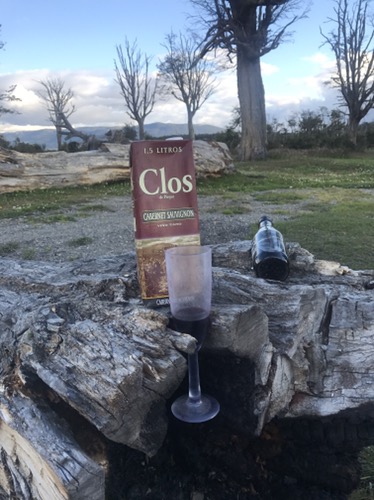
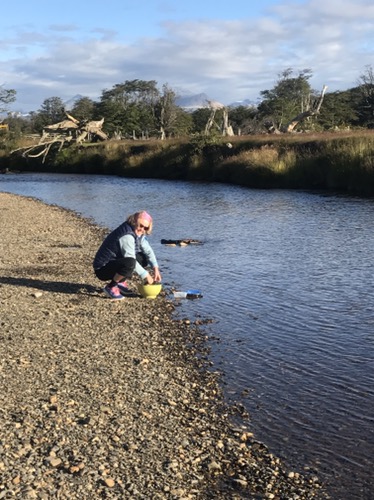
The friendly farm staff encourage people to camp on the huge grounds, so we found a beautiful spot right on the river. It was just us and so quiet. Neil discovered a load of chopped logs so we built a fire which lasted all evening and sat near its warmth as we sipped our G&T and ate our meal. We had such a lovely evening.
4th Feb – wild camp
Day 49
We awoke to a beautiful sunny morning. The sky was blue and the air crisp. Some wild horses grazed nearby and a cheeky fox came loping up and stole the apple core I’d thrown down for the horses. It was so peaceful that neither of us wanted to leave so we stayed all morning to enjoy the warmth of the sun.
We’d intended to drive just a few hours, but as we approached the arid flat plains, we decided to keep going all the way back to the ferry and through the border.
This time we encountered a most thorough border guard who searched almost everywhere for illegal fruit and veg. I’m amazed she didn’t find our onions, eggs and G&T lemons hidden deep in our luggage. Phew!!
We continued on, past the Chilean minefield all the way to the outskirts of Punta Arenas. This time of night, the petrol station we’d used before was closed and again we ran out of fuel. We used our spare petrol for the last time.
By the time we settled it was 9.30pm as we saw the last of the locals leave a picnic area. We were alone again to enjoy another home cooked supper right on the beach.

 South America
1st Feb – Tierra del Fuego
Day 46
We made an early start towards our 4th crossing from Chile into the Argentina. It was a long dusty drive alongside the construction of a big new road, probably for the use of the great big oil tankers. There were signs warning us not to leave the road due to mines!! Chile had planted them in the 90s to stop the Argentinians invading their border during a dispute over the ownership of 3 islands in the Beagle channel. Chile views Argentina as its big bad neighbour. It’s just as well we wild camped where we did free from mines!!
Just before the border, we stopped to hide our fruit and veg and have a coffee. Right behind us we’re thousands(?) of sheep being herded together . We watched with fascination as the local ranchers sat astride their horses doing very little, while their hugely talented and enthusiastic sheep dogs sped around these thousands of sheep, leading them to new ‘pastures’. The dogs were having a wonderful time, coordinating with each other to ambush a stray sheep and force it to rejoin its flock. We were a most impressed audience.
Obviously we are now experts at these borders, knowing the procedure and finding the right queue. Slightly worryingly, our passport pages are filling up at quite a rate and mine is almost full. We were through in no time and arrived just in time for the 9am crossing to Tierra del Fuego. It was great fun with huge industrial equipment being transported on top of massive lorries on the open ferry, being taken to the oil refineries or construction companies. In the water at the front of the ferry, Neil saw a big white object gliding through the waters below, which may have been a shark or a whale. Other Argentinians were equally excited.
Once in Tierra del Fuego we decided to take a slight detour to see an old English graveyard indicated on our map. It had 4 or 5 impressive granite gravestone which told their own stories. All had died in the late 1800s, 2 men were killed by Indians, 2 by drowning in Useless Bay and a 26 year old lady died, maybe in childbirth? Such was the life of the early settlers in these areas. In the distance we saw a large abandoned estancia and surrounding smaller houses, also abandoned.
We drove on to explore the farm with its battered lopsided sign “Estancia Josephina”. We were soon ticked off by a guardian who appeared from nowhere, but became friendly when we explained we were English. These old estancias have been designated as national monuments and are looked after by local farmers, and he invited us to have a good look around.
In its day, it must have been an impressive two storey home with massive decorative rooms and huge fireplaces in each one. All the windows had 2 sets of windows, essentially double glazing, to keep out the wind and the cold. Now the glass lay shattered on the floor and the paint pealed away from the walls of the empty rooms. We could imagine the life once enjoyed there of dinner parties, children running through the rooms, arguments over land boundaries, guns left by the front door, discussions about sheep and cattle. The farm warehouse across the way was enormous and millions of sheep must have been processed through it. It didn’t take much imagination to see ourselves back in those pioneering days. We felt rather sad for those families who’d lived and lost all this.
We drove further along the flat dry plains and past more oil wells to reach the booming port of Rio Grande. Compared with the pretty Puerto Natales, we found it simply functional and rather boring. It had lots of new shops and banks and was surrounded by big factories, so we withdrew some cash from the bank and drove on.
Searching, as usual, for a place to camp, preferably near water, we drove on south to Tolhuin. We had no idea this flat dry windswept countryside of the north of Tierra del Fuego would develop mountains and lakes towards the south. It was simply beautiful. What a wonderful surprise! Tolhuin is such a pretty town full of little wooden houses, wide streets and chilled relaxed people. We loved it.
We’d read about a famous bakery in Tolhuin which supposedly had the best pastries in the Southern Hemisphere and it did! It’s charismatic owner had started it in the 1980s and had managed to attract famous Argentinians from all over the country to visit, displaying their photos proudly on the walls. Our friend Jude from Culmstock told us he loved cyclists and she was given free accommodation in his basement during her epic cycle ride through S. America.
Afterwards, we headed to wild camp at the edge of the nearby lake Fagnano. The wind had whipped it up to look more like a grey sea as we sat in the bar (I.e. our 2 front seats) sipping a G&T, before retiring to the dining room (back of camper) to enjoy another home cooked meal then sleep.
2nd Feb – Ushuaia
Day 47
Most mornings we’d find the wind has subsided and today was no different. I awoke to see Neil in his swimmers, determined to have a swim in Tierra del Fuego. I was so impressed as he barely hesitated as he entered the cold lake. He claims to have enjoyed this rather invigorating start to the day, but grately appreciated the hot cup of tea handed to him as he emerged from the freezing water.
Leaving the lake, we wound our way up through beautiful forests and snow capped mountains, passing a ski resort and looking down deep valleys with white lakes reflecting the early morning sun. It was a stunning drive.
Ushuaia is an attractive town right on the Beagle channel. As you can imagine, it has a thriving tourist trade serving the thousands of people who pour off the Antarctic cruise ships. Like Bariloche, it looked a bit Swiss with attractive, colourful wooden buildings and a pretty high street full of outdoor equipment shops and coffee bars.
We parked in a big car park at the sea front overlooking the port, then visited the museums. We saw some fascinating genuine film footage of the Yamana Indians living in Tierra del Fuego, taken in 1930. They wore just animal skins to protect themselves from the freezing winters and no shoes. This particular tribe lived mainly on fish, so the whole family would spend the days in wooden canoes, even with a fire at the centre of it for cooking. The man at the front would spear the fish while the woman paddled at the rear and the children sat in the middle. Their huts were tiny round structures made from thin branches, bent into the shape of an igloo, with guanaco skins over them for warmth. There was also some great footage from the same era taken by a German pilot from a biplane. This place has attracted adventurous explorers from all over the globe. His films are so valued as we can see how the glaciers have retreated since those early days.
The museum explained how Ushuaia had originally been a penal colony with a rugged coast line of jagged rocks above and below the surface of the water. It told the story of a negligent sea captain on one of the first tourist cruise liners to come to the area in 1890. He steered his ship through what he thought was a shortcut in the Beagle channel, ignoring the lighthouse. The ship hit the rocks and sank. Fortunately all 1200 people on board made it safely to shore. The inhabitants of the town were mostly prisoners and their guards, but they all helped rescue the stricken passengers, lending their coats and uniforms to keep them warm and sharing food. The whole population of Ushuaia was then just 800, so catering for 1200 unexpected guests was quite a challenge. Before the ship completely sunk, the captain returned, allegedly to collect some papers. He disappeared with the ship as sunk to the depths of the sea.
Suitably educated, we bought tickets for a boat trip to see the sea lions and cormorants on the islands in the channel. It was still raining and windy, so the boat was only half full and wonderfully warm. We quickly made friends with the other passengers on board as we bounced our way over the waves to the islands. The first was absolutely packed with busy noisy cormorants nesting and fishing. Our boat was able to steer extremely close to the rocks where we could see their nests and marvel at the way they would fly at huge speed skimming above the water.
Then we sailed to another large rock full of sea lions. It was full of mothers and cubs with just one enormous slug like male sea lion asleep in the middle. They were all lying almost on top of each other for warmth and were hilarious to watch. Some would cuddle up to others who didn’t want to be cuddled. The snuggly cub would land a flipper on the disgruntled sea lion as he nestled in and persisted in his cuddling. The irritated sea lion would bark at the annoying cub and still it kept cuddling until the other would finally move away. The cuddling sea lion would then find another unsuspecting resting sea lion to annoy and start all over again. We could have watched this go on for hours.
A friendly Italian we met on board the boat recommended a great seafood restaurant in town called Tia Elvira. We were both quite cold and wet and it sounded perfect so we headed straight there. We had the most delicious sea food meal and enjoyed a wonderful bottle of Malbec. Suitably warmed up, we returned to the campervan, dumped our wet things in the front seats and climbed into bed. It was only 10pm but bed was the best place to be in such an evening.
But! Oh dear! No loo! It’s so easy for Neil. He just faces a wall looking interested in something and he’s fine. Not me! There were floodlights everywhere AND it was still raining. I crept all over the car park looking for a private place, but no luck. Then I saw some dark buildings. At last! But it was a restaurant and the customers inside were looking at me. What was this strange woman doing, wandering outside at 1am in the pouring rain in her coat and pyjamas?
On I lurked until I found a dark secluded place between 2 huge dumper bins. Relief!!!
A lesson learnt! Huge open floodlit car parks aren’t exactly conducive to a good night’s sleep!
3rd Feb – Harberton
Day 48
On waking, Neil looked out of the campervan window to see that all that rain we’d had last night had turned to snow, just a few metres higher than us on the mountains behind Ushuaia. It had been a cold night after my midnight escapade.
Since my comfy shoes were soaking wet, I wore my walking boots to the tourist information to wash and brush up in their loos. Luck!! It had the hottest hand drier ever! So I ran back and retrieved my soggy shoes and socks and spent the next 20 minutes in the tourist information loo drying them. I was able to put my comfy shoes back on straight away.
Neil also made good use of their loos having a shave and stripping down to the waist to wash while tourists came and went. What a pair! But a rather happy warm clean and dry pair!!
We’d pretty much seen most of Ushuaia and didn’t relish the idea of another night in the car park, so drove off to to a pretty place called Harberton. Yes! As in the Harberton in Devon.
It’s a huge estancia founded in the 1880s by an Englishman, Thomas Bridges. As a baby, he was abandoned under a bridge in London and was labelled T Bridge. The reverend who adopted him named him Thomas Bridges.
When Tom was a teenager, his family moved to become missionaries in Patagonia. But after a few years and a particularly vicious attack from the indigenous Indians, Tom’s family returned to UK. But Tom remained aged only 17 and continued to work hard for the missionary in Ushuaia, befriending the local Indian tribes and contributing hugely to the new settlement.
In his late twenties he went back to UK to study and fell in love with a Devon lady from Harberton. Soon they were married and undertook the gruelling 6 week boat trip back to Ushuaia.
She vowed never to return to Devon as the sea journey had been so awful, and settled with Tom in the missionary. Together they had 6 children.
In his spare time, Tom spent years and years compiling a dictionary translation of the strange Yamana language into English.
In thanks for all his hard work, the Argentinian government awarded him 80,000 hectares near Ushuaia in the very south of Tierra del Fuego. He built a huge farm and named it Estancia Harberton after his wife’s home town in Devon. They shipped much of their farming equipment from England and bought animals from the best stocks around the world. They were strong, hardworking and successful. Some of their direct descendants still live at the Halberton estancia which makes most of its money these days from tourism.
It’s a beautiful place to be. A huge farm right on the shores of the Beagle canal and looks the same today as the farm in photos taken 100 ears ago with its huge whitewashed walls and red tin roof. The barns and outhouses were all painted the same way. The big barn still contains the old farming equipment used for shearing etc. There was even an old turquoise Triumph Herald parked in the corner. We could easily imagine the life they’d have led over 100 years ago.
From there, we paid rather a lot of money (cash of course) to join a boat to sail out to the penguins on a nearby island. It was wonderful. We were able to walk right through their colony, inches away from some nests. The penguins didn’t seem to mind our presence at all. If they are nesting, its possible to annoy them, so the penguin starts to sway her head from side to side as a message to back off,which we did immediately. But generally they totally ignored us as they closed their eyes and soaked up the summer sun.
There were hundreds of tall black and white King and Magellan penguins to watch. We saw many many nests with mothers tending their big fluffy baby penguins who snuggled up to them. We watched how smoothly and fast they swam through the water fishing. A hilarious site was to see a teenage penguin try to run away from his nest in a very determined waddling fashion. His mother would waddle after him, through the colony and across the beach, as he’d swerve this way and that dodging other penguins to avoid capture by his mum hot on his tail. It was a great afternoon.
The friendly farm staff encourage people to camp on the huge grounds, so we found a beautiful spot right on the river. It was just us and so quiet. Neil discovered a load of chopped logs so we built a fire which lasted all evening and sat near its warmth as we sipped our G&T and ate our meal. We had such a lovely evening.
4th Feb – wild camp
Day 49
We awoke to a beautiful sunny morning. The sky was blue and the air crisp. Some wild horses grazed nearby and a cheeky fox came loping up and stole the apple core I’d thrown down for the horses. It was so peaceful that neither of us wanted to leave so we stayed all morning to enjoy the warmth of the sun.
We’d intended to drive just a few hours, but as we approached the arid flat plains, we decided to keep going all the way back to the ferry and through the border.
This time we encountered a most thorough border guard who searched almost everywhere for illegal fruit and veg. I’m amazed she didn’t find our onions, eggs and G&T lemons hidden deep in our luggage. Phew!!
We continued on, past the Chilean minefield all the way to the outskirts of Punta Arenas. This time of night, the petrol station we’d used before was closed and again we ran out of fuel. We used our spare petrol for the last time.
By the time we settled it was 9.30pm as we saw the last of the locals leave a picnic area. We were alone again to enjoy another home cooked supper right on the beach.
LikeLike
A wonderfully vivid record! I’m enjoying being along for the trip!
LikeLike